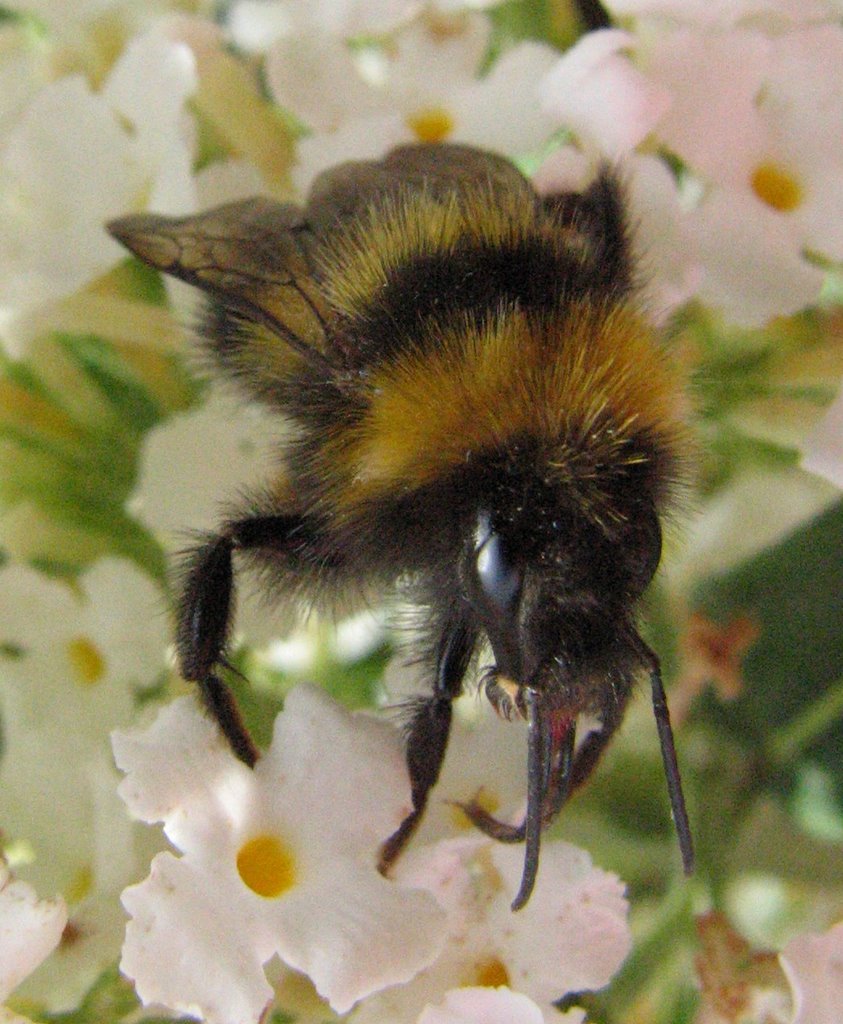
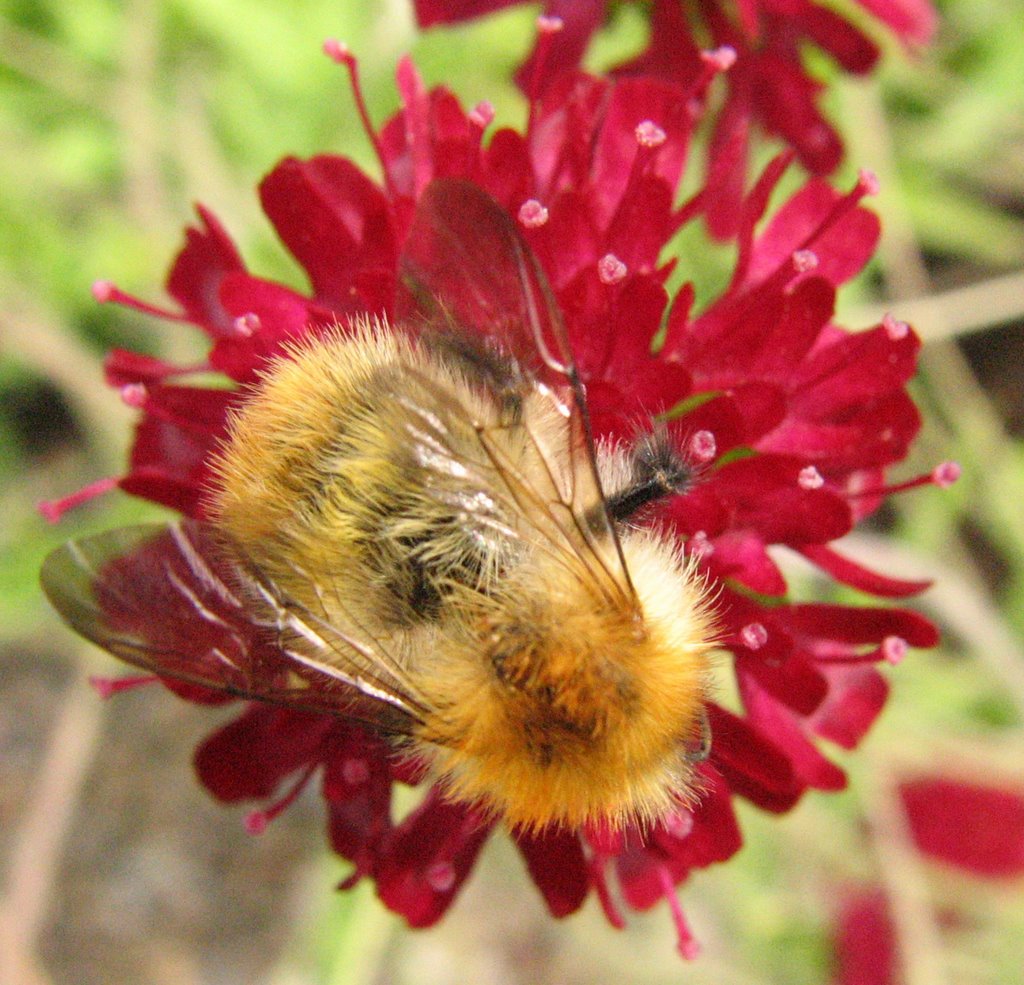
the farm has a hive and honey bees look quite different. I haven't seen any of them yet.
 these pretty little flowers are from a sempervivum, a house leek. it lives in the greenhouse and seems to quite like it.
 I took several photographs to try to show the bees in the foxglove flowers but this is the only one that shows, its very dark inside a foxglove flower and the bees can dissapear totaly out of sight!
 and just look at all the flowers on the broad beans! I imagine every one turning into a lovely pod of beans. everything in the veggy garden seems very behind, some folks seem to already be harvesting these. I am getting great lots of lettuce, some nice baby onions and have had one teeny baby courgette.


 oregano that self seeds, its very pretty.....in the cold frames amongst other weeds(and I found a few plant pots in there when I had a look, I wondered where they had gone!)
 loverly for attracting bees!
 beautiful little creatures.
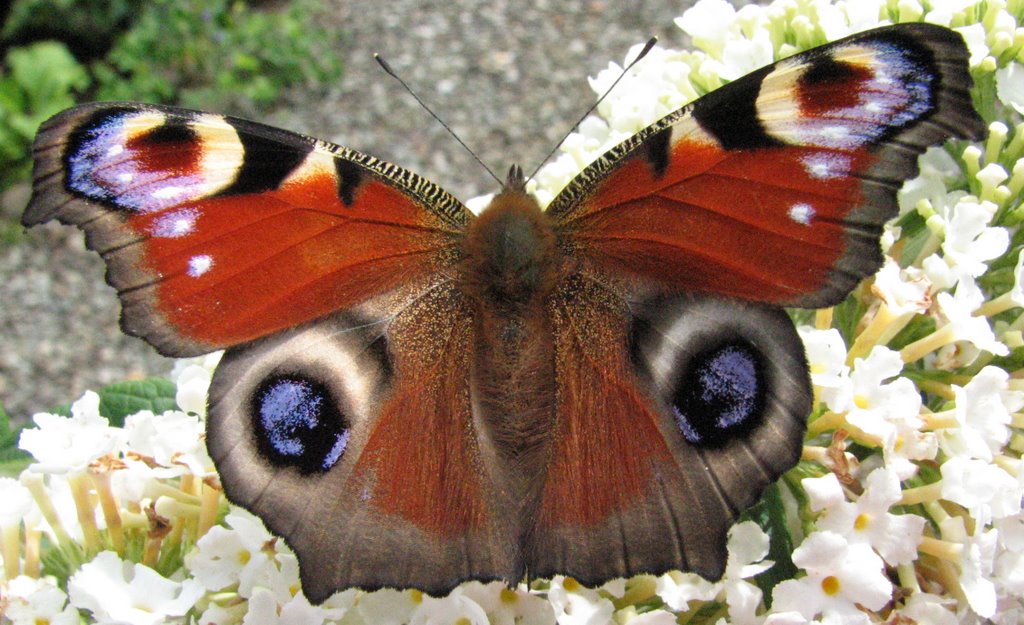
 I'm not sure what this is, not a bee anyway.
 and here is a lovely calabrese head, just ready for eating. there were four of them so eat two over a couple of days and chopped up the other two ready for use and have frozen them.
 its nice to have some veg coming in from the garden now, after a late start and some neglect! mostly everything is now weeded. I had to resort to weedkiller on the brick path as it was slowly dissapearing. it looks good now so hopefully will stay that way for a good long while.
 bee! a lucky shot as it was on the 'cow parsley' as I pointed the camera, it must have just taken off.
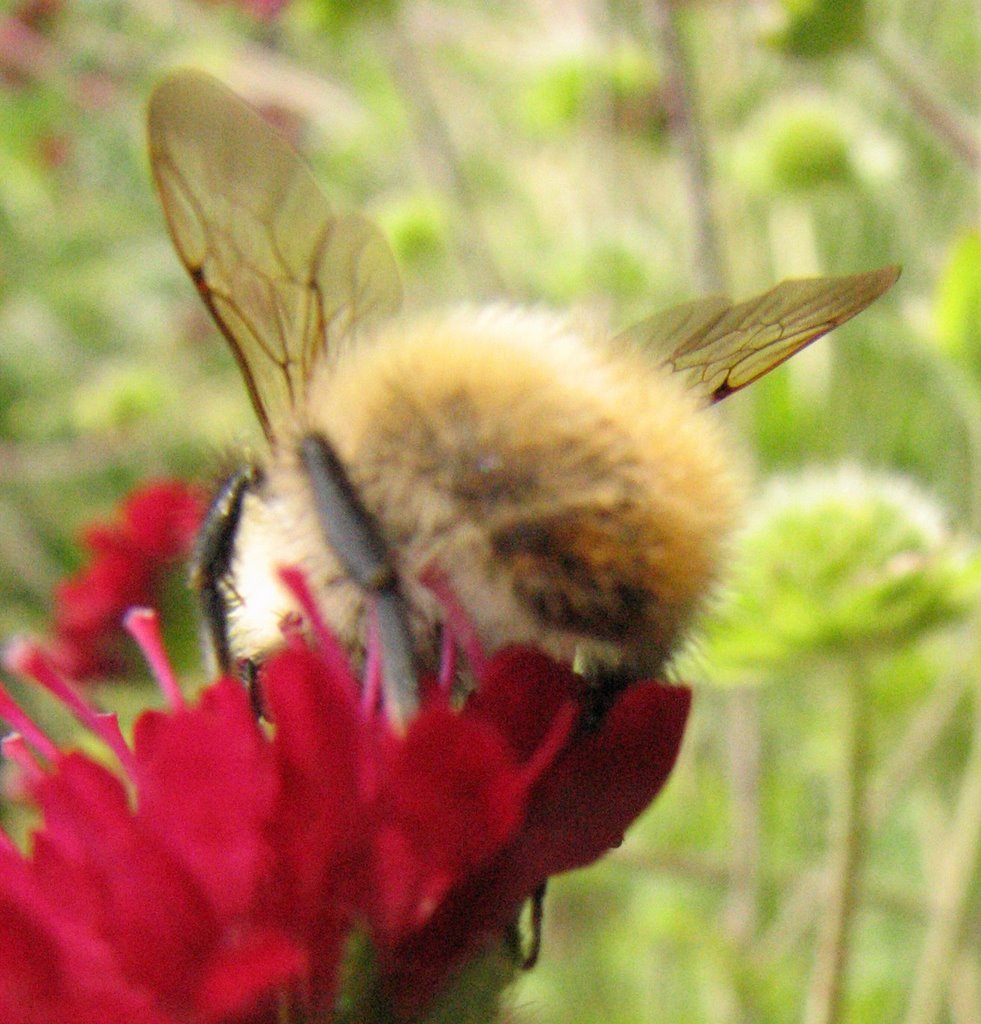
 a very busy bee, I couldn't get him in focus!
 the beautiful squares of the fritilary,
 just fascinating, it took years for them to grow in the garden, there are about a dozen now. unfortunately when they are just growing they look like blades of grass so I think the first couple of years I weeded them out....so there are advantages to not getting around to weeding!
 this pulmonaria was a cutting from a friend
 and the pretty littly dodecatheon, with some more flowers to come
 this was the last blue poppy, I don't think there will be any more flowers this year, hope it comes back again next year.
 at the other end of the garden this beautiful poppy is making a weed of itself, there are so many but I haven't the heart to pull them out. I think I started out with large doubles and small singles and they've produced a middle sized semi double, mother nature at work with art!
 the bees love them!
 the late flowering aters in the garden are attracting lots of bees
 aren't their wings fabulous?
 I realy needed into my garden shed but this wee chap seems to have taken up residence in the keyhole
 sneaking in a vegetable picture first, I just got round to putting in supports for the growing sugar snaps and peas. they are sharing a bed with onions and leeks.
 in 'close up' you can see all the wee beasties that you didn't notice. . .
 monarda
 another monarda with a welcome visitor
 astrantia major in red
 astrantia major in origional
 amazing patterns inside the foxglove flower. following information from botanical.com
 this nice dark aster is attracting a lot of bees, I have a paler one as well and I think the two colours were cuttings from the same plant?
 bee on a dark red sedum
 bee on a sedum I think is called Strawberries and Cream
 this is Cerinthe minor aurantica 'Bouquet Gold', grown from seed.
 a corn cob! not sure it will mature now, the weather is turning cold and this plant is already at a 45º angle due to winds.
 these three dahlia's each have a bee on them. I must make a note to plant these next year, their late flowering has really filled in a gap for the bees, the sedums are just starting to come out too.
 the biggest bee, on the bottom flower, I think I can see myself relected in its eye.